When should an agent help, step back, or connect people?
How can an agent infer what each teammate knows and needs, then decide whether to answer, scaffold their reasoning, step back, or connect them with a knowledgeable colleague?
I’m Dasol Hong, an AI product manager at LG AI Research. I earned my M.S. in Industrial Design at KAIST, where my research focused on human–computer interaction. My work spans responsible interaction design, educational tools, and enterprise AI.
I hope to study how AI agents can support people’s work while preserving opportunities to think independently and learn from one another.

AI agents can help individuals finish tasks, but how might their assistance change the way people learn from and work with one another?
How can an agent infer what each teammate knows and needs, then decide whether to answer, scaffold their reasoning, step back, or connect them with a knowledgeable colleague?
Beyond task performance, how can we measure what people learn, whether they seek advice from colleagues, and how knowledge spreads within a team?
Coding agents are usually designed to help an individual developer complete a task. Software development, however, depends on collaboration among developers, product managers, designers, and QA engineers. If people turn to an agent for questions they once asked colleagues, how might that change opportunities to explain decisions, share expertise, and learn from one another?
I want to model what each person knows, what they are trying to do, and whose expertise could help. Evaluation would track what people can explain or do independently after receiving assistance, whom they consult, and how they coordinate on later tasks.
I would begin by observing questions between colleagues, code reviews, and knowledge sharing before and after teams adopt coding agents. I would then compare direct answers with guided reasoning and referrals to colleagues, tracking task performance, independent learning, and collaboration over time.
The concept of healthy interdependence is informed by Noah Goodman’s essay, Interdependence as the Objective (2025).
02 / Selected work
Six projects across research and industry, with details of my role, approach, and what I learned.

Designed and evaluated a coding agent that adapts to developers’ work and verification needs.
MY CONTRIBUTIONS
Research question: When should an agent act, ask for approval, or connect a developer with a colleague?

Designed enterprise AI experiences for approximately 100,000 users across 16 LG affiliates.
MY CONTRIBUTIONS
Research question: How can AI support human judgment and collaboration at work?

Designed a public trial that helped people explore and evaluate K-EXAONE 2.0 through guided interactions.
MY CONTRIBUTIONS
Research question: How can a public trial help people understand what a foundation model can do and where its limits lie?
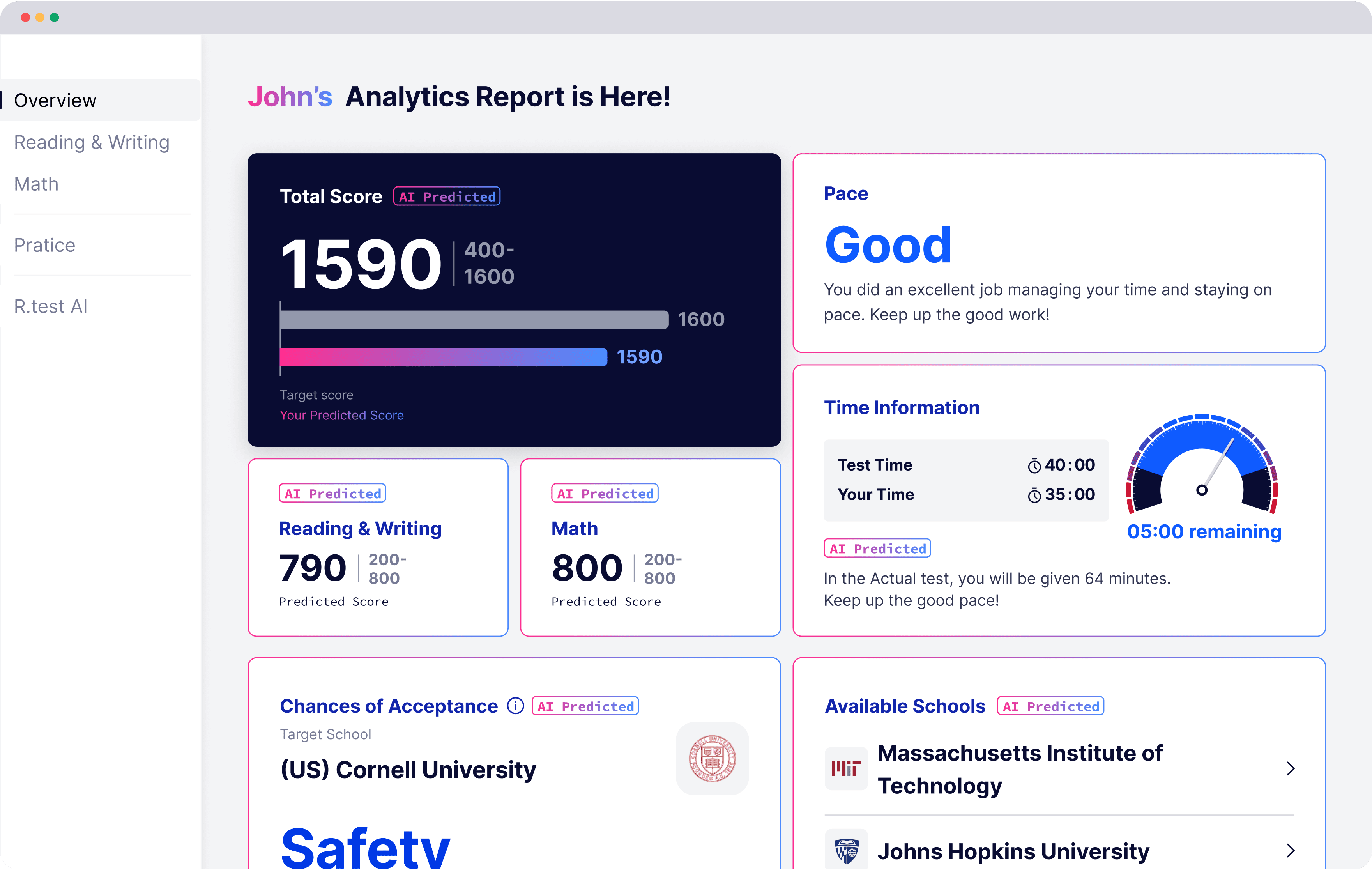
Helped bring AI-based SAT assessment to U.S. learners and explored Socratic guidance through a separate prototype.
MY CONTRIBUTIONS
Research question: Can an AI assessment help students become better problem solvers, rather than simply measure how well they perform?

Ran experiments and led the writing of a manuscript on using conversations about essays to complement AI text detection.
MY CONTRIBUTIONS
Research question: Can questions about an essay reveal understanding that an AI text detector cannot assess?


Designed and evaluated a reflection toolkit to help teams anticipate risks in AI-mediated social relationships.
MY CONTRIBUTIONS
Research question: When should AI act in a social relationship, and when should it preserve people’s judgment, consent, and participation?
Selected work is described at an appropriate public level. Proprietary product details, internal datasets, and unpublished materials are intentionally excluded.
03 / Research & writing
Dasol Hong*, Ji Yong Cho*, Bumsoo Kang*, Moontae Lee
*equal contributionNeurIPS 2026 · Position Paper Track
The paper argues that coding agent benchmarks cannot fully predict adoption. We propose a user-level harness that describes developers’ environments, skills, work practices and intervention points so agent evaluation reflects how people actually use coding agents.🎉I am presenting at NeurIPS 2026 in Sydney. 🎉
LG AI Research · Contributor: Dasol Hong
Research team results include a 750B parameter MoE model with 37B active parameters and a 256K token context. Model development results are attributed to the LG AI Research team.Research manuscript · Submitted to ACL; not accepted · Exploratory conversational assessment
24 participants contributed 41 essay–dialogue pairs. The study explored dialogue-based assessment, with limitations in sample diversity and assessment reliability.Dasol Hong · M.S. thesis, Department of Industrial Design, KAIST · Advisor: Youn-kyung Lim
The thesis combined metaphor elicitation, scenarios developed with six science fiction writers, and a toolkit evaluation with 12 design researchers and eight developers.Dasol Hong, Hyein Lee, Yuchun Yan, Hyeon Jeong Suk · Archives of Design Research, 32(2), 57 to 69 (2019)
Peer reviewed article · Conjoint analysis of eco-friendly packaging preferences, with 21 main study participants.I introduce LAION’s Open Empathic project and examine how multilingual volunteers can contribute to emotion annotation. The essay considers bias in automated emotion recognition and asks whose interpretations are represented in the data.
Connection to my research: This raises a question for participatory AI design: whose judgments shape the system, and how can contributors question its assumptions?
Read original Korean newsletter ↗A research commentary on “It’s About Power,” an ACM FAccT paper drawing on a survey of 115 people and interviews with 21 software practitioners. I examine why ethical checklists alone are insufficient: employment insecurity, workplace culture, incentives, and access to resources determine whether engineers can raise concerns and act on them. Responsible AI requires collective agency and organizational accountability, not just individual ethical intention.
Connection to my research: The ability to question an AI system depends partly on whether people have the authority and organizational support to raise concerns.
Read my section in the original Korean newsletter ↗An essay on the environmental cost of AI use, drawing on research that measures the energy and carbon footprints of different model tasks. I ask when smaller task-specific models, or doing the work ourselves, might be the more responsible choice, considering both future generations and human agency.
Read original Korean article ↗A briefing on AI and work, covering job displacement, overlooked coordination work, and responsibility for AI-generated outputs. I also discuss uncertainty and bias across emerging applications.
Read original Korean article ↗
How greater productivity with AI changes the need for critical thinking, with implications for the design of ChatEXAONE.
Read article ↗
A practical guide to applying human–AI interaction toolkits in product teams.
Read article ↗Posts about applying responsible AI design and Microsoft's Human–AI Experience (HAX) Toolkit in product teams.
Browse essays ↗Medium · 2023 · 10 essays
Brief English summaries of my posts, most originally written in Korean, with links to the full articles.
Drawing on an interview with Netflix Principal Product Manager Travis Brooks, I explore how product teams combine firsthand product use, customer interviews, behavioral data, and experiments to understand users. The piece emphasizes humility and open decision-making in product discovery.
Read original article ↗Using Superhuman as a case study, I explain how teams can measure product–market fit, understand committed users, and translate survey feedback into priorities and iterative product improvements.
Read original article ↗I translated and introduced the World Ethical Data Foundation’s proposed Responsible AI Open Standard into Korean, discussing participatory approaches to transparency and accountability among developers, users, and stakeholders.
Read original article ↗I summarize a discussion featuring Sam Altman and Greg Brockman and reflect on skills, product–market fit, employment, universal basic income, and copyright issues in a changing AI economy.
Read original article ↗I examine Google’s People + AI approach to identifying meaningful user problems before introducing AI, asking when machine learning creates value and when a simpler product approach may be more appropriate.
Read original article ↗From the perspective of a product manager building GPT-4-based products, I discuss Azure Machine Learning Prompt Flow for prompt development, evaluation, optimization, and deployment.
Read original article ↗I review selected Microsoft Build 2023 announcements, including Bing and ChatGPT integration, Microsoft 365 Copilot plugins, and Copilot experiences across Microsoft products.
Read original article ↗I examine Google I/O discussions of responsible AI, including Perspective API, toxicity detection, and the limitations and product implications of automated content classification.
Read original article ↗An account of how I translated Microsoft’s Guidelines for Human–AI Interaction into a Korean workshop workbook and facilitated a four-step pilot with Riiid product managers. The workshop selected eight of the eighteen guidelines and turned them into concrete product design priorities, with feedback from three product managers and a DevRel observer.
Read the English article ↗ · Read original article ↗An English-language guide to the HAX design guidelines, workbook, playbook, and workshop process. I share facilitation checklists and steps for helping multidisciplinary teams apply human–AI interaction principles.
Read original article ↗Reflections on learning from users, making decisions with colleagues, and working across product and model development.
Today marks two years since I joined LG AI Research. I wanted to look back on what I have learned and write some of it down.
When I joined, I wrote this line in my introduction: “Slow and steady wins the race.”
Looking back, those words describe the past two years well. I focused on the small things I could do each day. Over time, I learned that even a small initiative can influence how a team works when people share it, improve it, and build on it together.
During my first week, one of the first things I wanted to do was look at user data for the AI product I was working on. I wanted to understand where users struggled, which features they found useful, and how they actually used the product. A month later, I recruited and interviewed more than 20 users. I wanted to find a way to turn what we learned into future product decisions.
Today, data is gradually becoming a shared language within our team. We look at it together, define problems from different perspectives, and discuss what the product should do next. I could not have done this alone. It grew through many conversations, different perspectives, and the work we did together.
I joined LG AI Research because I wanted to go beyond building AI products on top of existing models. I wanted to work more closely with the models themselves and better understand how they shape the user experience.
Today, I have the opportunity to think about the direction of the product and the model together. That has helped me see more clearly how closely product decisions and model behavior are connected.
My thinking about AI ethics has also deepened over the past two years. At my previous company, I studied Microsoft’s Responsible AI framework on my own and introduced it to my team. Now, I take part in a biweekly seminar run by our AI ethics team, where we discuss papers and how those ideas could apply to our work.
These conversations have made me think more seriously about how AI can improve productivity while also supporting people’s judgment, learning, and growth. One principle I want to hold on to is this: AI should help people grow alongside it.
These discussions also led to two articles that I wrote with colleagues: 1. AI Toolkits for Designing Trustworthy AI Experiences (2024) https://lnkd.in/gt37itN9
2. How AI Is Changing Human Critical Thinking (2025) https://lnkd.in/gmi6GBBf
Looking back, I thought about what helped me keep going through difficult moments. A colleague once asked me, “You always seem so energetic at work. What keeps you going?” I answered, “Gratitude.”
I was grateful for each new day and for the chance to try again. There were difficult moments too, but gratitude helped me begin again and take the next step.
I hope to keep moving forward with gratitude, learning along the way, and building AI products that help people grow.
Updates on AI products, research, events, and the human questions behind technology.
Visit LinkedIn ↗Reading & reflection
Notes on three books by Byung Chul Han and the questions they raised for my research and product work.
Byung Chul Han · Translated by Erik Butler
About the book. Han challenges the assumption that making everything visible and readily accessible produces understanding or trust. The demand for transparency can flatten ambiguity, diminish privacy, and turn social relationships into processes of exposure and control.
My reflection. This book directly informed my 2020 Thought encourager thesis. I used the contrast between positivity and negativity to question AI-mediated exchanges that prioritize similarity, speed, and ease while reducing room for difference, patience, or appropriate distance.
Connection to my research: An agent may know a great deal about its user, but that does not give it permission to expose information or negotiate on their behalf. I want AI to make its role and information use legible while preserving consent and the human choice not to disclose.
When should an agent disclose what it knows or does, and when should it preserve a person’s boundary?
Publisher / book information ↗Byung Chul Han · Translated by Erik Butler
About the book. Han argues that a continuous stream of digital communication does not automatically produce a public capable of deliberation or collective action. More messages and faster responses may coexist with fragmented attention and weakened political discourse.
My reflection. I read this as a challenge to a common product metric: more interactions do not necessarily mean stronger relationships. When AI agents answer every question that might have gone to a colleague, they may make work faster while changing the way knowledge circulates among people.
Connection to my research: This tension informs my proposed organizational knowledge Skill for EXAONE CLI and my interest in evaluating peer questions, review, and knowledge sharing, not only the number of tasks an agent completes.
Can an agent support collective intelligence without substituting itself for the conversations that produce it?
Publisher / book information ↗Byung Chul Han · Translated by Wieland Hoban
About the book. Han examines what is lost when unfamiliarity and otherness are displaced by a preference for what resembles the self. His account of the “terror of the Same” challenges communication environments that reinforce echo chambers instead of enabling encounters with difference.
My reflection. The book reinforces a question first raised by the science fiction scenarios in Thought encourager: if an agent makes every encounter comfortable and agreeable, what opportunities do people lose to understand others, manage disagreement, and exercise judgment?
Connection to my research: This makes me interested in agents that help people understand a disagreement, rather than simply resolve it for them.
How can agents leave room for disagreement and learning from people with different perspectives?
Publisher / book information ↗

In my thesis, fictional user reviews, checklists of relational values, and timed questions helped practitioners examine consent, disclosure, difference, and unintended effects before redesigning AI agent functions.
Explore my thesis research ↗04 / Experience & education
Korea Advanced Institute of Science & Technology (KAIST)
M.S. Industrial Design (HCI), 2020
Advisor: Prof. Youn-kyung Lim
These studies informed my attention to what people experience through AI interactions, not just what a system does.
School of the Art Institute of Chicago
Bachelor’s degree, 2016
Focus: Speculative Design · Advisor: Jessica Charlesworth
Research design, longitudinal study design, LLM-as-judge evaluation, benchmarks, behavioral log analysis, conjoint analysis, survey research, interviews, focus groups, design workshops, product strategy.
Languages: Korean (native), English (bilingual)

losad2020@gmail.com
LinkedIn ↗ · Seoul, South Korea
Model families: K-EXAONE and EXAONE series.
EXAONE CLI model context: K-EXAONE v2.5 750B (512K context); EXAONE v5.0 alpha (1M context).
Built AI tools for product planning, exploring how they could help people clarify ideas, discuss alternatives, and make informed decisions together.
AI Product Planner at Common Computer (Teachable NLP with GPT-2, 2021); Product Manager at Algorima (2020 to 2021), developing an AI online course implemented in elementary schools.
Worked with the Data Feminism program within a Harvard Humanitarian Initiative and MIT Connection Science collaboration, examining gender inequality in data through mixed methods and AI.
Developed Thought encourager to support responsible design of AI-mediated social interaction; investigated how users teach intelligent systems and maintain agency over machine learning.
Worked on a bacteria detection product with The.Wave.Talk (CES Innovation Award 2020; iF Design Award 2020).
Dasol Hong*, Ji Yong Cho*, Bumsoo Kang*, Moontae Lee · NeurIPS 2026 Position Paper Track. *equal contribution.
Master’s thesis · KAIST, 2020 · Advisor: Prof. Youn-kyung Lim.
Research manuscript, not accepted · Evaluated with 24 participants and 41 essay–dialogue pairs. Study methods and results are presented in the project case study.
Dasol Hong, Hyein Lee, Yuchun Yan, Hyeon Jeong Suk · Archives of Design Research 32(2), 2019.
05 / Contact
I welcome conversations about PhD opportunities and research on human–AI interaction, learning, and collaboration.
Dasol Hong · AI Product Manager & HCI Researcher